
Great College Life · Product Management Fellowship
Your batchmates are
chasing a dream job at 22.
You're on the path to CEO by 40.
DT Fellows work 5-9pm, Mon-Sat, alongside their degree. Your first work experience shapes your career. Most internships give you tasks. Here, you solve problems, understand business context, and make your own decisions.
“Everyone at some point in life should work at DT.”
Feliza Dadachenji, Maths Asst Professor | DT Fellow, 2020
We don't look for the best candidate. We look for the most curious.
Product Management Fellowship · 3 rounds · 96 hours · No interviews until you've seen how we work.
The real fork in your career
Employee mindset,
or management mindset?
An MD or CEO with 1,000 employees is carrying 1,000 families. Kids in school. Kids in college — kids like you were, not long ago. Every call they make about the business eventually reaches a dinner table somewhere. You are about to choose which side of that table you sit on: the one waiting for the decision, or the one making it.
Employee mindset
- You do the work that lands on your desk.
- You are measured on your own output.
- Your decisions mostly affect you.
Management mindset
- You decide which work gets done at all.
- You are measured on what 1,000 people produce.
- Your decisions land on 1,000 dinner tables.
But management is not a title
It is a worldview you have to build. A different way of seeing the business — and it asks real things of you.
Read a P&L — and know what moves it
Where the money is made, where it quietly leaks, and the one lever that actually changes the number.
Understand how organisations really work
A thousand-person company runs on incentives and systems, not on the lines of an org chart.
Design systems that scale
You can never speak to all 1,000 people. Your system has to carry the right approach to every one of them.
Where you come in
The third layer of leadership.
These are small companies. Traditional teams. People who have run the same way for decades. And they are betting on DT Fellows as a third layer of leadership — working beside their CXOs to bring AI transformation into a place that has never seen it. You will not be an employee waiting for instructions. You will be the one designing the system the other thousand run on. That is the mindset we are selecting for.
Before you start — read this
Your mind map gets a few seconds.
Just like an answer sheet.
Picture an examiner with 300 papers stacked in front of them. Yours gets seconds, not minutes. The marks don’t go to whoever wrote the most. They go to the one answer that is clearly their own. Your hand-drawn mind map is that answer sheet.
You draw it by hand
On paper. No printout.
We glance, like an examiner
Seconds, not minutes.
It earns the marks, or it doesn't
Your thinking, or ChatGPT's.
Here’s the test we actually run
ChatGPT
4 seconds📄 [pasted: this entire assignment page]
Here is your diagram: Problem → build a dashboard → train the team → done.
If that is your diagram too —
where is your thinking?
And ChatGPT will hand you confident, wrong answers. We expect you to argue with it, test the logic, and catch what doesn’t hold. The thinking is the part it cannot do for you.
What ChatGPT gave back
“Problem → build a dashboard →
train the team → done.”
Word for word, what ChatGPT said.
Could be any company, anywhere.
Reads like everyone else’s.
Your own thinking
I asked it back: would a dashboard
actually get used? It wouldn’t —
the last one didn’t.
So I drew what really blocks the work.
Specific to this problem. By hand.
We want to meet you.
Most pages we get are exactly what ChatGPT returns. We can tell in seconds. The few we shortlist did the digging, caught its mistakes, and drew something it never could. Where is the thinking? That is the entire test.
Why DT
Two kinds of youngsters.
India produces one. DT hires the other.
Type A · Employee Mindset
Impress. Fit into existing systems. Follow instructions. India's placement system is built to produce and hire Type A.
Type B · Intrapreneur Mindset
Creative. Innovative. Make decisions. Own outcomes. Passion-driven problem solvers.
What is DeepThought, really?
The founders who build ₹50Cr, ₹100Cr, ₹500Cr companies already think scientifically about their product. But that thinking stays stuck in one person. Product rigor next to execution sloppiness.
DeepThought closes that gap. We install Scientific Thinking into how companies operate daily. Not advice. Not workshops. A system where daily work IS hypothesis-test-learn.
15 years. Started in 2011 with Sciensation. Built PDGMS. The vehicle changed four times. The mission never did.
What Fellows Do
Decision-making power in their 20s.
Most people reach decision-making roles by their 40s. DT Fellows work alongside CEOs and Directors of ₹100-500Cr companies, driving organisational transformation and AI, while still in college.

Sravan Kumar
Chief of Staff
Pharma company, ₹200Cr+
Works directly with the MD (NASA scientist founder). Brought in AI that cut purchase-to-dispatch from 3 days to 1. Runs decisions that change how the factory floor operates.
Joined as: BBA student

Shagun Mishra
AI Programs Lead
India’s largest probiotic manufacturer
Led a 20-member team. Shipped 58 software modules as a fresher in 2023.before AI tools existed. Now leads AI Programs at a company present in 60+ countries.
Joined as: BTech student

Jayaraj
Engagement Lead
Multiple DT client companies
Works with company Directors on growth strategy and execution. Drives organisational transformation across manufacturing and services companies.
Joined as: BTech student
The Architects
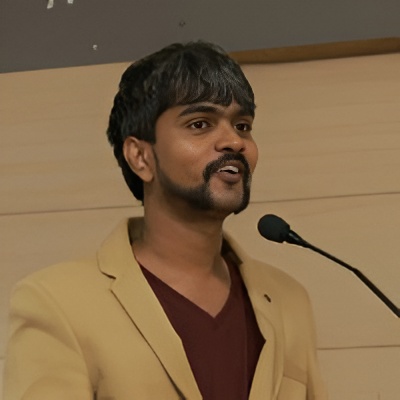
Tarun Ayitam
15 years of designing the scientific method. Alumnus of IISER Pune (Mathematics & Theoretical Computer Science) and TEDx speaker. Tarun encoded 32+ company implementations into PDGMS AI Platform to lower CAC and drive employee ownership.
HERITAGE
Who's been in this room
This programme has been running in different forms since 2011. Fifty participants from six countries have been through it. These are the people whose work and questions shaped what the programme is today.
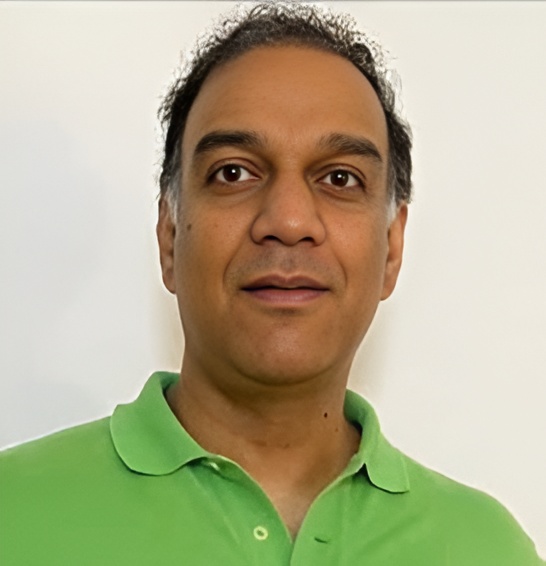
Raghu Seelamsetty
Founder, Escape Velocity
 2017
2017
Nastaran Bisheban
CTO, KFC Canada
 2021
2021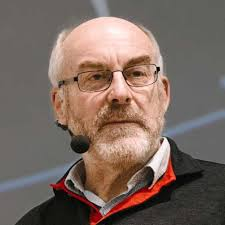
Dave Snowden
Founder & CSO, Cognitive Edge
 2021
2021
Dr. Michael Lissack
President, American Society for Cybernetics
 2021
2021
Abhinav Gupta
AVP Innovation, Broadridge
2023
Humberto Schwab
Founder, Socratic Design Academy
 2020
2020
Dr. Matti Itkonen
Cultural Philosopher, University of Jyväskylä
 2021
2021
Kashyap Kompella
Hyderabad Chair, StartupGrind
2017
Jayesh Ranjan
IAS Officer, Govt of Telangana
2017
Dr. David Willows
Director of Advancement, University of Brussels
 2021
2021Designations are as on the date when the participant attended the dialogue.
WHAT IT LOOKS LIKE
The work in action.
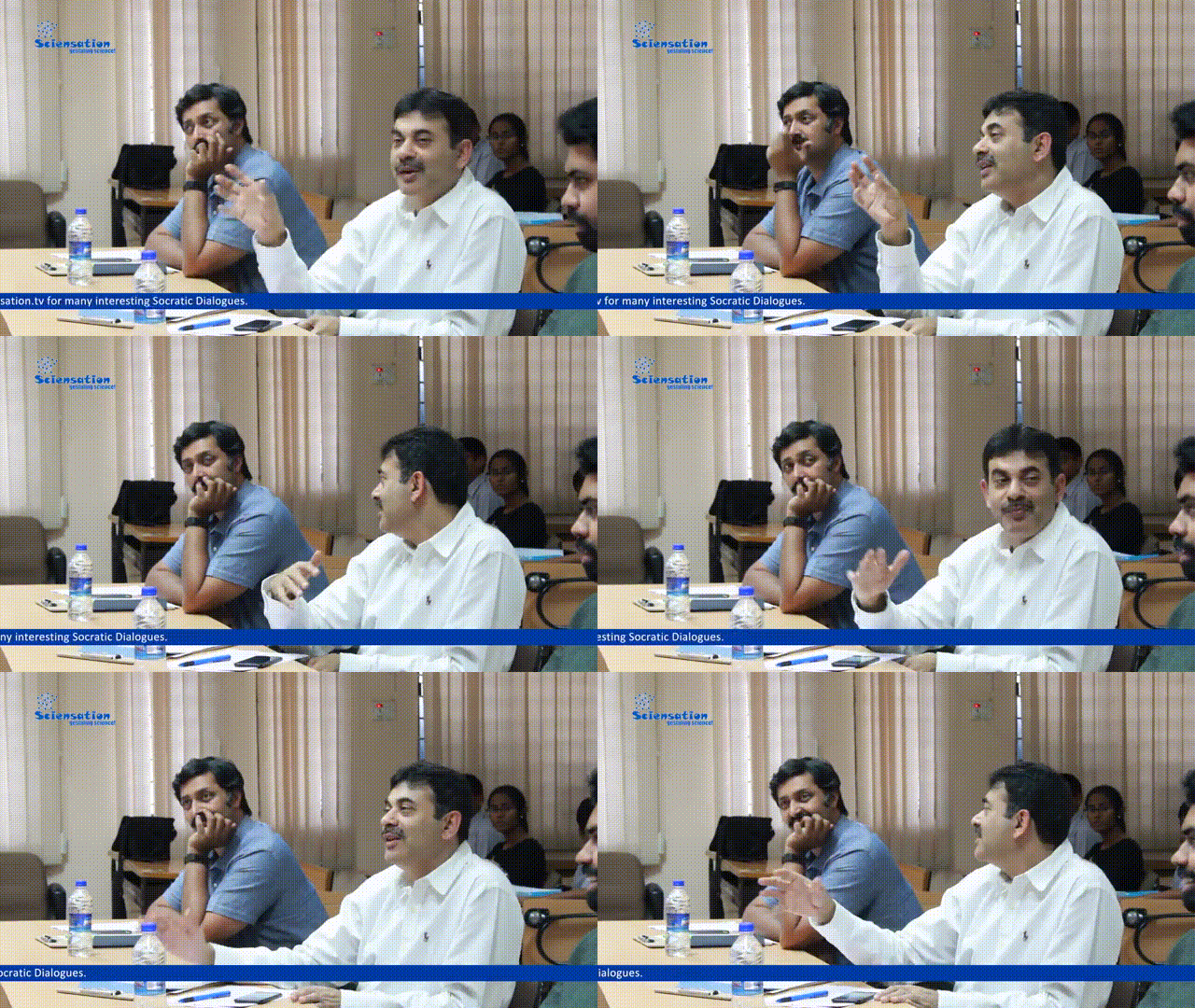
Roundtable
Hack Your MVP
Live session with practitioners and founders.
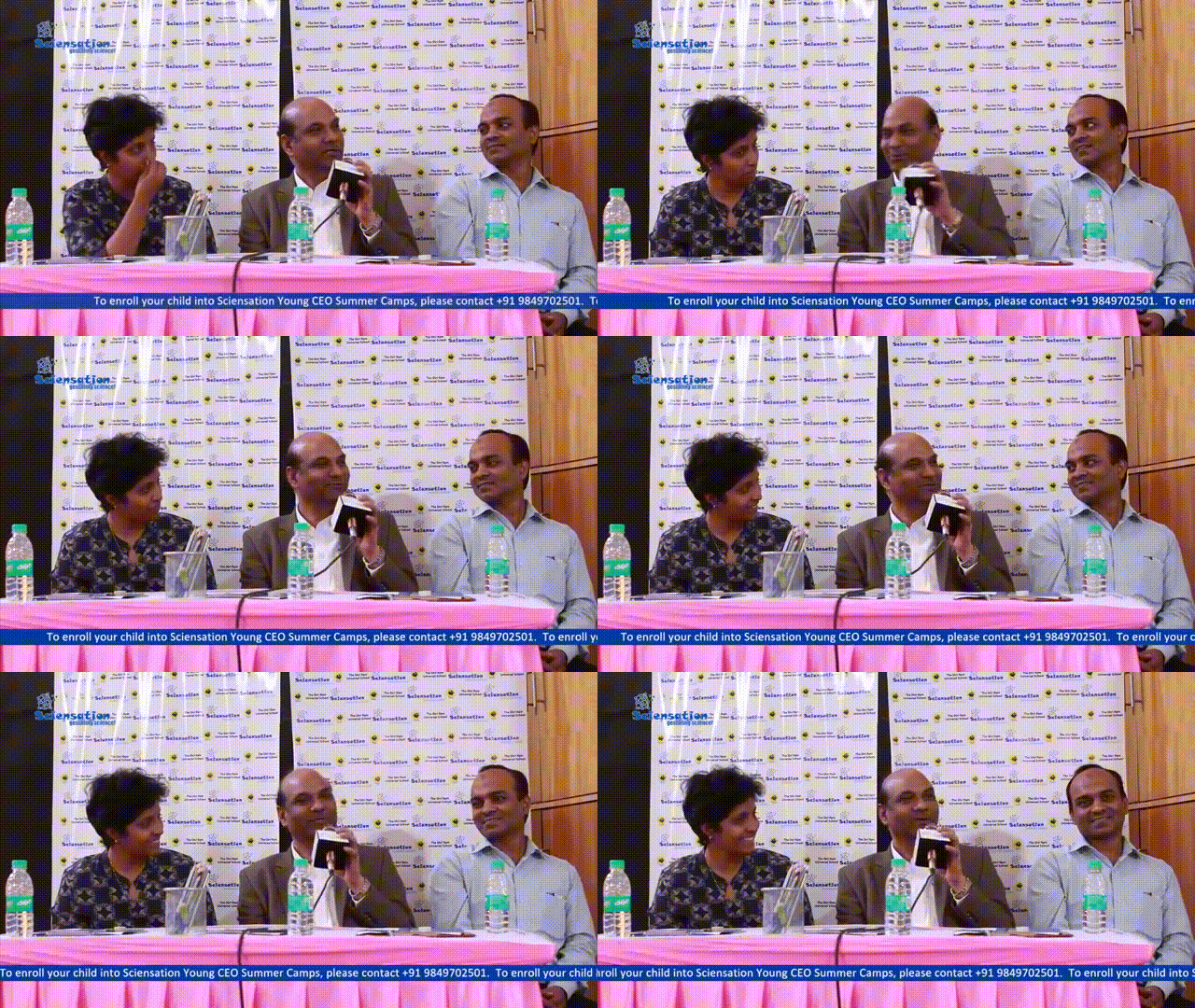
Socratic Dialogue
Darwin Day
Jury-style debate on scientific and business questions.
The Grid
25 cells. Every company.
Every company runs on 25 cells. Five vertical layers from Direction (V5) down to Employee (V1). Five horizontal functions from Offers (H1) through to Orders (H5). When something goes wrong in a business, it lives in one of these cells. The grid tells you where to look.
| H1 Offers | H2 Capability | H3 Capacity | H4 Experience | H5 Orders | |
|---|---|---|---|---|---|
| V5 Direction | V5×H1 The board decides what to offer the market. Which segments to enter, which bets to place, which products to build or kill. | V5×H2 The board sets the capability agenda. What skills, R&D investments, and knowledge does the company need? | V5×H3 The board decides the scale at which the company operates. Production philosophy, plant investments, make-or-buy. | V5×H4 The board defines what the customer experience should feel like. The promise the company makes. | V5×H5 The board sets revenue targets. How much, from whom, by when. The number the entire grid works backward from. |
| V4 Strategy | V4×H1 Strategy translates direction into market moves. Pricing, positioning, competitive response. | V4×H2 Strategy designs the capability roadmap. Which technologies, processes, and people to develop. | V4×H3 Strategy plans infrastructure and production. Build vs buy, capacity planning, supply chain design. | V4×H4 Strategy designs the service and fulfillment model. Channels, support tiers, satisfaction benchmarks. | V4×H5 Strategy designs the sales architecture. Account targeting, pipeline design, deal structures. |
| V3 Plan | V3×H1 The program manager plans the go-to-market. Launch timelines, campaign specs, channel priorities. | V3×H2 The program manager runs R&D and training programs. Investigate, hypothesise, experiment, standardise. | V3×H3 The program manager plans production schedules and delivery timelines. Work breakdown, resource allocation, bottleneck removal. | V3×H4 The program manager plans the fulfillment process. Delivery workflows, quality checkpoints, escalation paths. | V3×H5 The program manager plans the sales pipeline. Territory assignments, deal stages, forecast cadence. |
| V2 Supervisor | V2×H1 The supervisor manages the team doing market research, customer interviews, competitive analysis. | V2×H2 The supervisor manages engineers, trainers, R&D teams. Root cause analysis, process experiments, quality checks. | V2×H3 The supervisor manages the floor. Production, logistics, throughput, daily delivery targets. | V2×H4 The supervisor manages customer-facing teams. Support, service, complaint resolution. | V2×H5 The supervisor manages sales reps. Daily call targets, proposal reviews, deal coaching. |
| V1 Employee | V1×H1 The employee does the research, talks to customers, drafts the offer documents. | V1×H2 The employee builds, prototyping, testing, learning, documenting. | V1×H3 The employee does the work. Manufacturing, shipping, coding, delivering. | V1×H4 The employee serves the customer. Handles complaints, ensures satisfaction, closes the loop. | V1×H5 The salesman sells. Calls, proposals, negotiations, closes. Cash enters the system. |
Case Files
A 3-day purchase to dispatch cycle. Every department did their job, but the handoffs were unowned.
The company mapped the actual flow and redesigned the protocol between departments, setup Microsoft CoPilot AI automations.
“3 days became 1 day, recovering 200+ days of capacity per year”
The Proof

DeepThought helped us in deploying and managing high performance elastic teams. DT runs continuous improvement, which means Project2 is better than Project1 and Project3 is better than Project2
Pharma & Biotech Transformation
How To Approach This
This is an open-book exam.
Books, internet, ChatGPT — all allowed. Finding an answer is not the test. Everyone can do that now. The test is whose thinking ends up on the answer sheet: yours, or the machine's.
Below is the actual work. Every box is something you hand in. If you can't tick it, you skipped that part — and we will see the gap. Garbage in, garbage out.
A · Research
What you produce
AI rule
Use AI to find and explain sources. It does not count as a source. A fact counts only if you can name its real origin.
B · Reasoning
What you produce
AI rule
Use AI to list options and poke holes. Choosing which is right is yours, in your words. If your B answers match ChatGPT’s first reply, you didn’t reason — you copied.
C · The Artifact
What you hand in
AI rule
None of this is AI-generated. Your hand, your voice, your code, your words.
A real example, from this page
This very section was written with an AI. Here is what the person typed back to it, draft after draft, until it stopped being generic:
The AI never once knew, on its own, that it was being generic. A person had to know — and had to keep rejecting until the work became concrete, the boxes above. That rejecting is the thinking. That is the job.
Why this matters
Paste this page into ChatGPT and submit what it returns, and you cannot produce A1, A2, B2, B5, or C2 — they do not exist unless a person did the work. That is how we read a submission in one minute: we look for the boxes a machine can't fill.
Selection Process
4 rounds. Each one teaches you something.
DT doesn't look for experience or qualifications. We look for a mindset. We look for a candidate with a “fire in the belly.”
Role-Specific Assignment
For You
You understand the role through a simulation
For Us
We understand your skillset
48 hours
Video Reflection & Mindmap
For You
You understand DeepThought and PDGMS AI Platform
For Us
We understand if you connect with our vision
48 hours (with R3)
Career Roadmap Reflection
For You
You understand how this aligns with your career
For Us
We understand your mindset
48 hours (with R2)
Virtual Tour
For You
You experience the work culture first-hand
For Us
We understand if you can endure the rigor
6 days (after shortlisting)
This process is rigorous and most applicants are rejected. Proceed only if challenges fuel you.
Your Journey
3 rounds. 96 hours. Step by step.
The clock starts when you send the consent message on Internshala.
Hour 0
Hour 48
Hour 96
Send Consent
Start · Internshala chat · Receive R1 link
Round 1: Assignment
0-48h · Internshala · Receive R2 + R3
Round 2: Mindmap
48-96h · Internshala (photo) · Submit immediately
Round 3: Career Roadmap
48-96h · Form + Internshala · Then confirm below
Confirm all three rounds done
Right after R3 · Internshala chat · DT asks you questions
Shortlisting
After close · Internshala · Zoom link for tour
Virtual Tour
Tue / Fri · Zoom 5-9 PM · Interview
Before you begin
Three shortcuts. None of them worked.
Three candidates went through this same process. Got shortlisted. Did the virtual tour. Sat across from a real CEO. Each one took a shortcut.
All three had potential.
None made it through.
“What I've seen is all of you are talking about things without understanding what they mean. And that is dangerous.”
The depth you build here is what carries you through that conversation.
That part is up to you.
Round 1
Role-Specific Assignment
Complete a simulation for the role you've applied for.
Timeline
48 hours from receiving the assignment
Submission
Assignment + hand-drawn sketch of your thought process
Guidelines
- You may use AI to complete the assignment. Set guardrails against AI hallucination.
- DO NOT use AI for the hand-drawn sketch. It must show YOUR thought process.
- Read the detailed guidelines in the shared repository carefully before starting.
Want to stand out
Add a 100-day plan to your assignment.
The assignment shows you can do the work. A 100-day plan shows something rarer. It shows you can lead. Imagine the company gives you three months and a free hand. Show how you would change the way it thinks and works, not just finish your own tasks.
A hundred days is twelve weeks, about three months. Break it into three phases.
See the system
Learn how the company actually runs today.
- Read the P&L and find where money is made and where it leaks.
- Watch how decisions get made and where work gets stuck.
- Talk to people across the floor, not only the leaders.
What is really broken here, underneath what everyone says is broken?
You are on track when
You can name the one thing that holds the whole place back.
Prove one change
Pick the one problem that changes the most, and design a system for it.
- Build a system, not a one-time fix.
- Run a small pilot with one team.
- Get one visible win that people can see for themselves.
What is the smallest change that makes the organisation behave differently?
You are on track when
One team already works the new way and likes it.
Make it the new normal
Turn the pilot into something that runs without you.
- Change habits, not heroics.
- Let AI carry the routine so people carry the judgment.
- Hand the system to the team and step back.
How does this keep running after you stop pushing it?
You are on track when
The change shows up on a real number, like a cost, a cycle time, or a defect rate.
An IC plan reads like this
“I will finish these tasks and ship these features.”
A leader’s plan reads like this
“I will change how the team decides, so the work keeps happening without me.”
Put your 100-day plan on one page and add it to your assignment. Most people send only the tasks. The few who send a plan for changing the company are the ones we remember.
Round 1 is not the finish.
This selection runs over three rounds. Round 1 is the assignment you just read. Round 2 is the mindmap and Round 3 is the career roadmap. You have to finish all three before we take your application forward.
Once all three are done, send us one message on Internshala so we know, written in your own words like this:
“I have completed all three rounds. These were the Round 1 assignment, the Round 2 mindmap, and the Round 3 career roadmap.”
After that the DT team will ask you a few questions and invite you to the Virtual Tour.
Round 2
Video Reflection & Mindmap
Watch the 38-minute video below. Take detailed notes. Then draw a hand-drawn mindmap capturing how the ideas connect.
Timeline
48 hours (shared with R3, after R1)
Video
38-minute walkthrough of DT mission, CARR, and PDGMS
Deliverable
Hand-drawn mindmap on paper (submit photo on Internshala)
Guidelines
- Take detailed notes while watching. 3-4 pages minimum with finer arguments, not just headlines.
- Do not ignore unfamiliar words. Google them or ask AI to explain in your mother tongue.
- Hand-drawn only. NO AI. If we find AI usage in the mindmap, you will be eliminated. If your goal is fitness, you don't take a car.you actually run.
- Analytical detail matters. The bar is high. Many get eliminated due to mindmaps that lack detail. This is a map of how ideas relate, not a summary.
- On the same mindmap, mark what you intend to observe about Scientific Thinking during the Virtual Tour.
- Submit on Internshala immediately after completing Round 2. Do not wait for Round 3.
What good looks like
A web of ideas, not a list of points.
Aim for at least 30 nodes on one hand-drawn A4 sheet, connected richly like the one here. Most people stop at ten boxes in a row. The ones who think keep finding links between ideas, and the page fills up. If your sheet looks thin, you have not gone deep enough yet.
Round 3
Career Roadmap
Every other round tested what you can do. This one asks whether you can see yourself honestly.
We are looking for three things. They sound similar, but they do different work.
The other trap is more subtle.
You can be completely honest and still fail this round.
Twenty honest answers. Shortlisted. Weeks of prep. Sits in front of a CEO — cannot answer a single follow-up. Not because they lied. Because they never went past the first layer.
He will pick one and ask what it means. If the only thing underneath is the first obvious thought anyone would have, the conversation is over in thirty seconds.
When you catch yourself writing an answer that feels true enough — that is the moment this round starts.
Two people, five years from now.
The person who performs
Says “I learned the importance of communication.”
Gets hired everywhere. Sounds great in meetings.
Same problems keep following her, job after job.
She genuinely does not understand why.
The person who is honest
Says “I was the bottleneck because I never checked.”
That sentence cost her something to write.
Changed one specific behaviour. Then compounded.
Can see what is actually broken. Starts with herself.
We hire the second person.
If you answer these 20 questions honestly, you will know something about yourself that you did not know before you started. That is true whether we select you or not. The whole thing takes about an hour. You can perform all of it. Smart candidates usually do. But the person who performs walks out with nothing, and we can tell the difference.
The 20 Questions
Twenty questions. Five dimensions.
Each dimension shows a different angle of how you operate.
These are not trick questions, and there is no scoring rubric you can reverse-engineer. Some of them will be easy to answer honestly. Others will make you want to construct a version where you come out looking good. When that urge kicks in, pay attention. That is the question that matters most. Answer from a real memory. If you do not have one for a particular question, say so. “I have never been in this situation” is an honest answer, and a made-up example is not.
The Process
Three steps.
You have read the questions. Now here is how the rest of Round 3 works, and why each step is designed the way it is.
What happens after you submit
Your answers go to real people. If shortlisted, you enter daily drills, a real assignment about a real company, and an interview with the CEO who runs it.
That CEO will not ask you to walk through your presentation. He will pick one sentence and ask what it is for. If you built a dashboard without knowing what the business measures, he will know in thirty seconds.
The depth you practice in Round 3 is the depth that carries you through that conversation. Or does not.
The Reckoning
Four more questions.
These matter most in the entire round. Answer them in your own words on Internshala. Five lines each. No AI. We can tell.
Whether you join DT or not, you now see something about yourself that you did not see an hour ago. That is the actual skill. The people who can do this are the people who can sit across from a founder, see what is actually broken, and say it without flinching. That is what DT Fellows do.
Now share it.
Go to Internshala. Send us your three answers. Five lines each. No AI. We will read every word.
Complete Round 3 on InternshalaAfter all three rounds
Finished all three rounds? Tell us on Internshala.
When you have submitted your Round 3 career roadmap, send one message on Internshala so we know you are done with every round. You can write it in your own words like this:
“I have completed all three rounds. These were the Round 1 assignment, the Round 2 mindmap, and the Round 3 career roadmap.”
Once we read it, the DT team will ask you a few questions and then invite you to the Virtual Tour.
Round 4 · After Shortlisting
Virtual Tour
We show you how we work first. Interviews happen after the tour, not before.
Schedule
3 days tour + 3 days shadowing. 5 PM – 9 PM via Zoom.
Orientation Days
New cohorts start on Tuesdays and Fridays.
What You'll See
Hypothesis Framing
Real business problems framed as hypotheses, not complaints
PDGMS Workspace
Threadbuilder, Rigorbuilder, Self-Gratitude, Journal in action
Constraint Classification
Not “I’m stuck” but which type of stuck, routed to the right team
The 5×5 Grid
5 value chain functions × 5 authority levels, live
Commitment
What we ask. What we invest.
Proceed only if you can prioritise the Fellowship and dedicate the required time.
Schedule
5 PM – 9 PM
Monday through Saturday
Duration
6 months
Structured fellowship
Stipend
₹2,000/month
Tech roles
L&D Investment
₹5,000/month
DT invests in your growth
Internet
High-speed required
Stable for video calls
Mode
Remote (Zoom)
Video-on collaboration
Rules of Engagement
AI policy. Per round.
Round 1.Assignment
Use AI tools freely. Set guardrails against hallucination.
Round 1.Hand-drawn Sketch
Shows YOUR thought process. Hand-drawn only.
Round 2.Mindmap
Hand-drawn on paper. AI usage = elimination.
Round 3.ChatGPT Bot
The ChatGPT bot IS the tool. Use it as designed.
Round 3.Internshala Message
Your own words. No Grammarly, no LLMs.
All Communication with DT
We want YOUR thinking, not a language model's.
Consent to Proceed
Before starting, you'll reply on Internshala with:
“I understand that:
- The selection process is long, rigorous, and most applicants are not selected.
- I may be rejected even after significant effort.
- I will remain professional in all communication.
- I will not use LLM/AI tools in the chat thread.
- I will complete Round 1 within 48 hours and R1+R2+R3 within 96 hours.”
FAQs
Common questions. Clear answers.
Open Roles
Pick your path into the great college life.
Each role has a unique Round 1 assignment. The fellowship experience (rounds, mentorship, the work) is the same.
Great College Life
Other internships give you a certificate.
This one gives you a seat at the table.
Sravan went from BBA to Chief of Staff. Shagun shipped 58 modules as a fresher. They weren't trained for it. They did the work, alongside founders, on real problems, with real stakes.
“Everyone at some point in life should work at DT.”
Feliza Dadachenji, Maths Asst Professor | DT Fellow, 2020
We don't look for the best candidate.
We look for the most curious one.
Challenges should fuel you, not frustrate you.